Booking choice: The boat tour with 4 swim stops, from $61 per person. Check dates Tour details
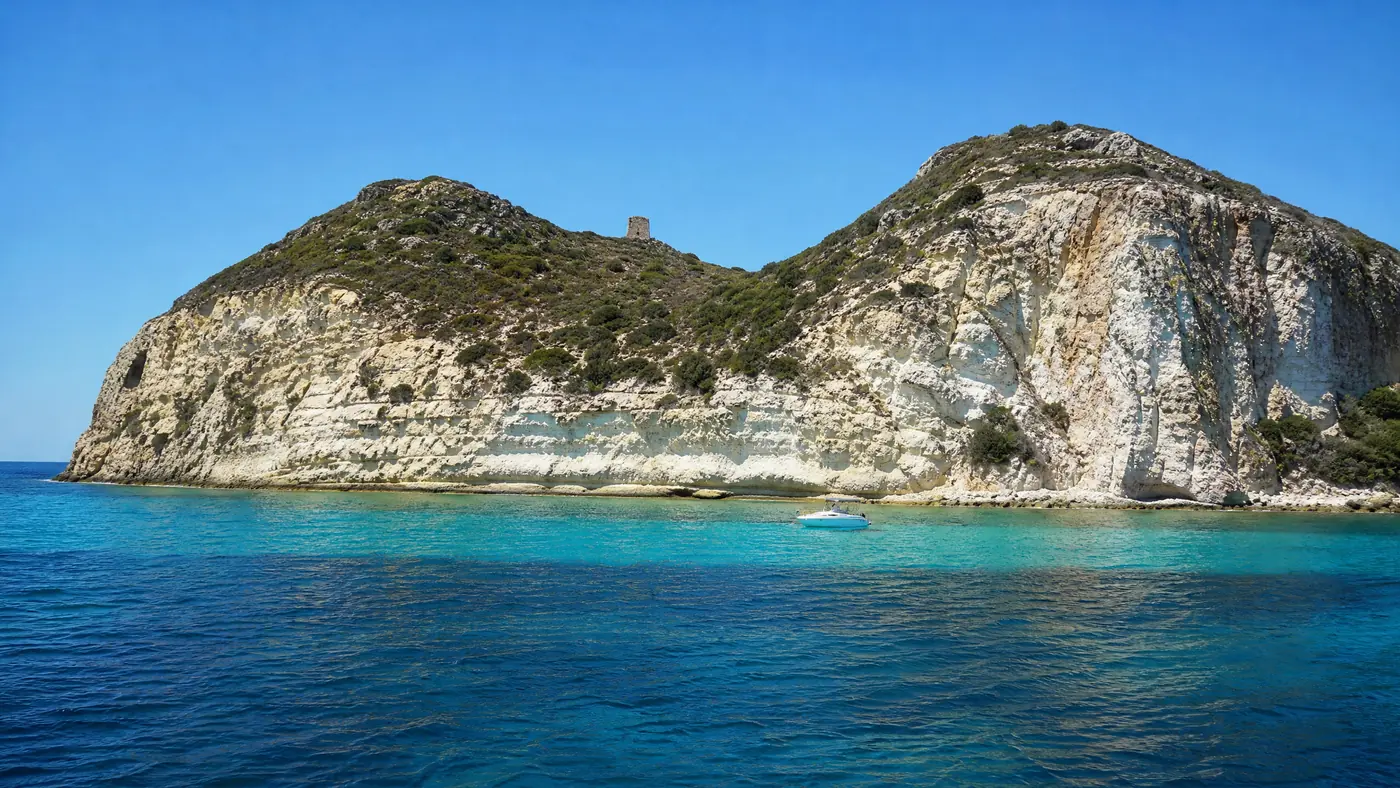
Almost every boat trip from Cagliari has the same goal: the Devil's Saddle, a promontory a few kilometres from the city centre. The boats leave from the harbor by Via Roma, Su Siccu or Marina Piccola, run along the coast and stop to swim in the coves at its feet.
This guide covers what the Saddle is, the legend behind the name, what you see from the boat, the caves, the Punic and Roman ruins on top, the walking path from Calamosca and how the walk compares with the boat.
The quick answer
The Devil's Saddle (Sella del Diavolo) is the limestone promontory of Capo Sant'Elia between Poetto and Calamosca, in the middle of the Golfo degli Angeli. The boat tour with 4 swim stops, rated 4.9 from 2,497 reviews, sails round it in 3 hours from $61; on foot, a free path climbs it from Calamosca.
What is the Devil's Saddle in Cagliari?
A limestone headland, the seaward end of the Sant'Elia hill, between Poetto beach to the east and Calamosca to the west. It stands in the exact centre of the Golfo degli Angeli, per Sardegna Turismo.
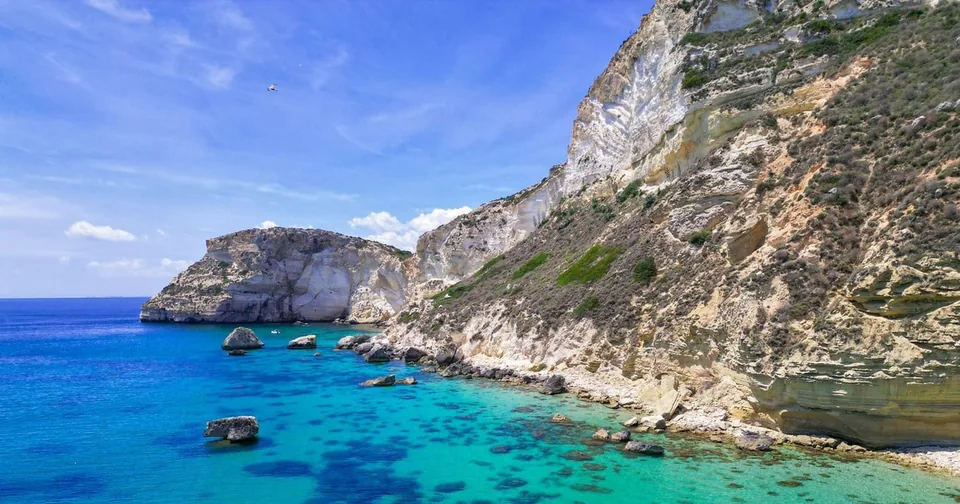
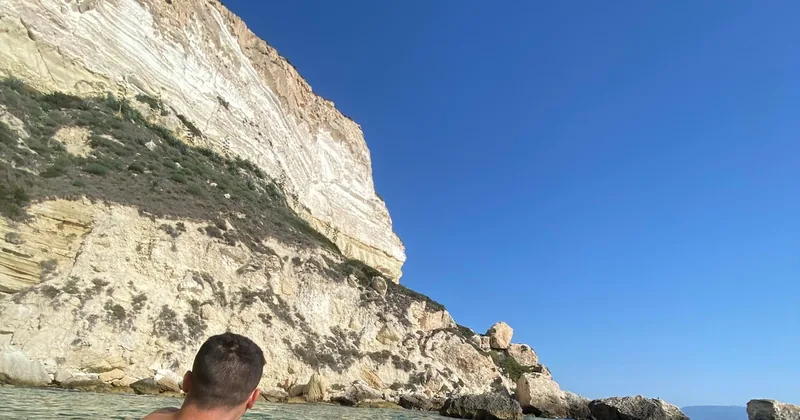
Its highest point is about 135 meters above the sea, per Wikipedia (the Italian Ministry of Culture's atlas lists 130 m). The rock is of ancient marine origin, made mostly of shells and fossils from the Miocene, which is why the cliffs look so pale from the boat. Two Natura 2000 sites cover the area, per the same atlas: Torre del Poetto, and Monte Sant'Elia, Cala Mosca and Cala Fighera.
Sardegna Turismo lists peregrine falcons, kestrels and Sardinian partridges on the headland, and fan palms, junipers and wild olives on its slopes. Foxes and wild rabbits turn up in the bushes too.
What is the legend of the Devil's Saddle?
Lucifer's devils fought the angels of the archangel Michael for the gulf, and lost. Lucifer was thrown, his saddle fell and turned to stone, and the bay became the Gulf of Angels.
Sardegna Turismo tells two versions. In the popular one, the devils fell for the place and tried to take it. In the other, the angels asked God for the gulf as a gift, for its purity, and Lucifer grew jealous. Either way the battle was fought in the sky above Cagliari, Michael's army won, and the saddle that dropped became the promontory. The people of the bay named the gulf after their saviours: the Golfo degli Angeli.
The FAI, Italy's national heritage trust, adds a historical reading: the devils stand for the pagans who worshipped the goddess Astarte on the headland, the angels for the first Christians. Your guide on board will likely tell the story as you pass under the dip.
A rubber boat from Marina Piccola round the Saddle to Calamosca and Cala Fighera, with a spritz and chips.
Check dates for the Devil's Saddle rubber boatWhat do you see from the boat around the Devil's Saddle?
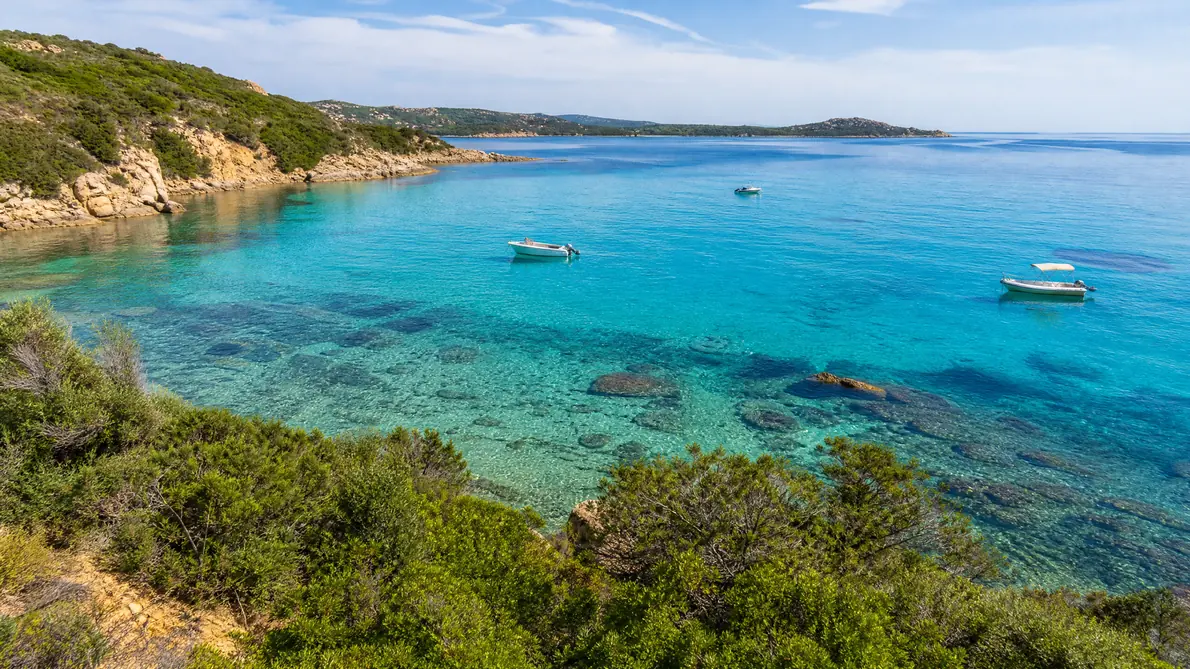
The white cliffs of Capo Sant'Elia, the coves of Calamosca and Cala Fighera, sea caves, the Calamosca lighthouse and, on the far side, the long beach of Poetto.
The skipper picks the stops on the day, by the sea. The listings name these places:
- Calamosca: a sand and pebble beach about 4 km from the centre, sheltered between Capo Sant'Elia and its old lighthouse on one side and the Saddle on the other (Sardegna Turismo).
- Cala Fighera: a small cove with a rocky seabed under the cliffs, on the boat tours and the rental alike.
- The caves: the sailboat cruise passes the Cave of the Doves, the rubber boat the rock formations of a sea cave its listing calls the Devil's Cave.
- Cala Paradiso: a stop on the rubber boat and the rental, for the colours of the water.
- Poetto: the city beach, about 8 km of sand towards Quartu Sant'Elena, seen from the sea.
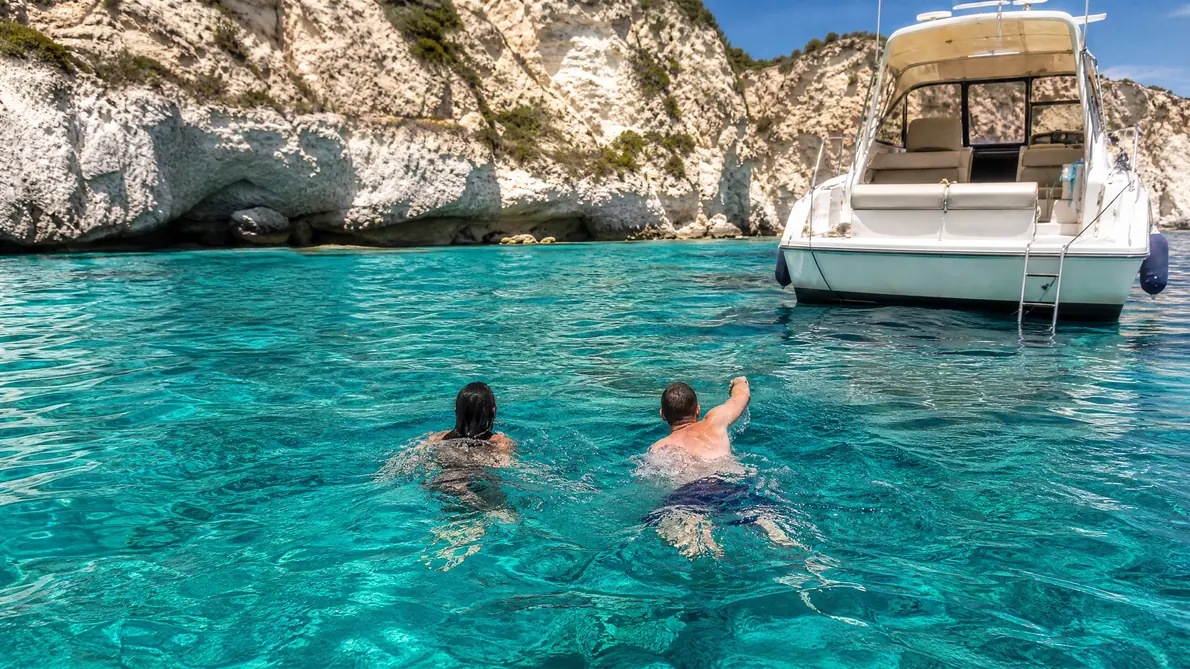
You swim from the boat, not the shore. The catamaran listing notes that swimming from the beaches or cliffs along its route is prohibited by law because of the risk of rockfall, so the boats anchor off and you jump in with a mask and snorkel.
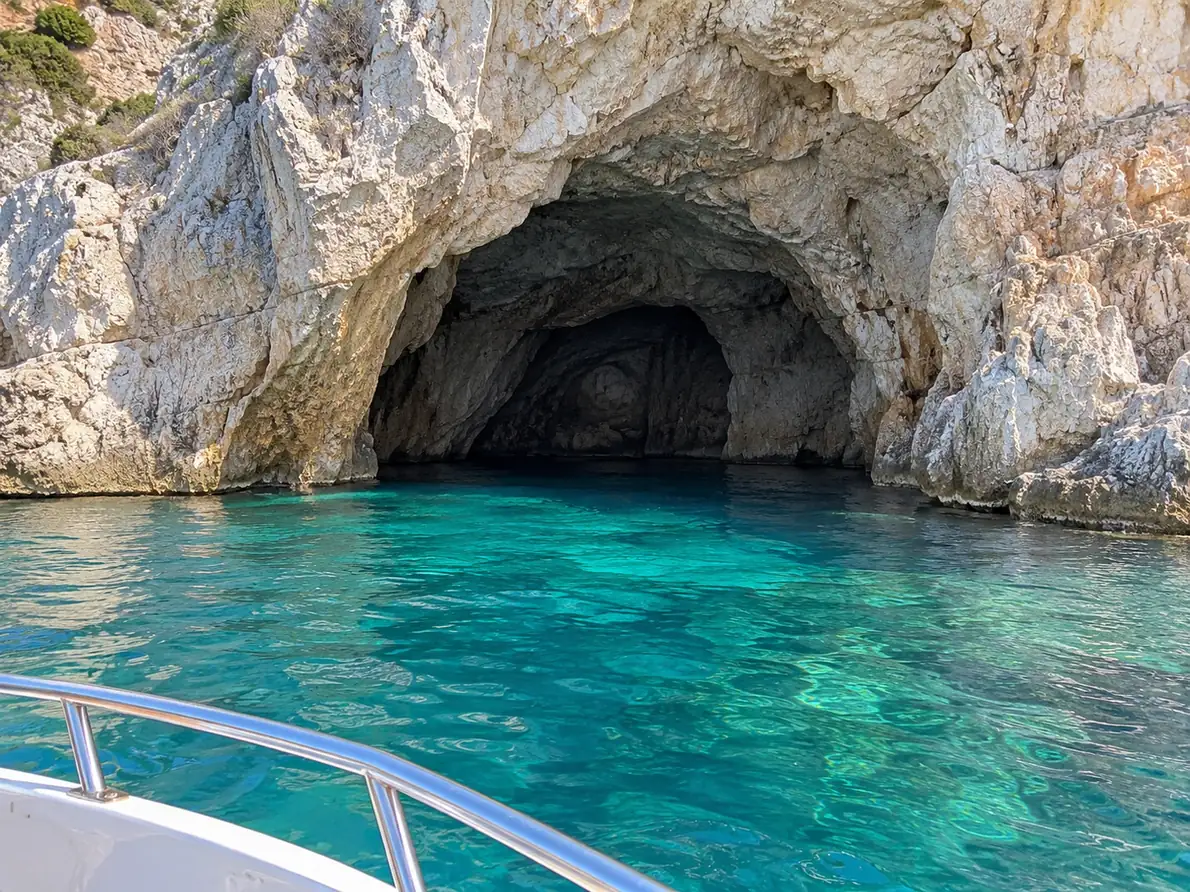
What is the Grotta dei Colombi?
The Pigeons' Cave, a cave at the foot of the cliff below the Saddle. Cagliari Turismo lists it among the Neolithic sites of the promontory.
On land, the city's tourism office describes the path walking on the cliff right above the Pigeons' Cave, so walkers look down on it. From the water you look up into it. The sailboat cruise names the Cave of the Doves on its route, between the Calamosca lighthouse and Cala Fighera, and the natural cavities round Capo Sant'Elia have yielded traces of people since the Neolithic, per Sardegna Turismo.
Oliwia rented a boat in Sep 2026 and found "Beautiful beaches, sea caves and places to see along the way." On a calm day the skipper can bring a small boat close; how close depends on the swell.
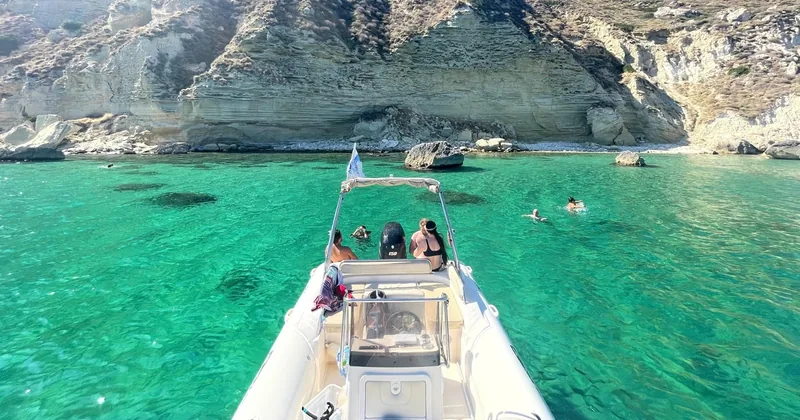
Three hours along the cliffs from Molo Dogana, four swim stops chosen by the skipper, a mask and snorkel and a glass of prosecco.
Explore the boat tour with 4 swim stops Tour detailsWhat is on top of the Devil's Saddle?
The ruins of a Punic temple to Astarte, a Punic and a Roman cistern, the remains of the church of Sant'Elia, old watchtowers and World War II blockhouses.
- The temple of Astarte: its ruins stand on the highest point; a slab found there is in the Archaeological Museum of Cagliari (Sardegna Turismo).
- Two cisterns: a Punic one, about 3 meters deep and a dozen long, and a flask-shaped Roman one cut into the rock with channels for rainwater (Wikipedia).
- Sant'Elia: the foundations of a church most likely built in the 11th century by the Vittorini monks with their monastery. Tradition says the saint was martyred on the hill. A large cross stands beside the ruins.
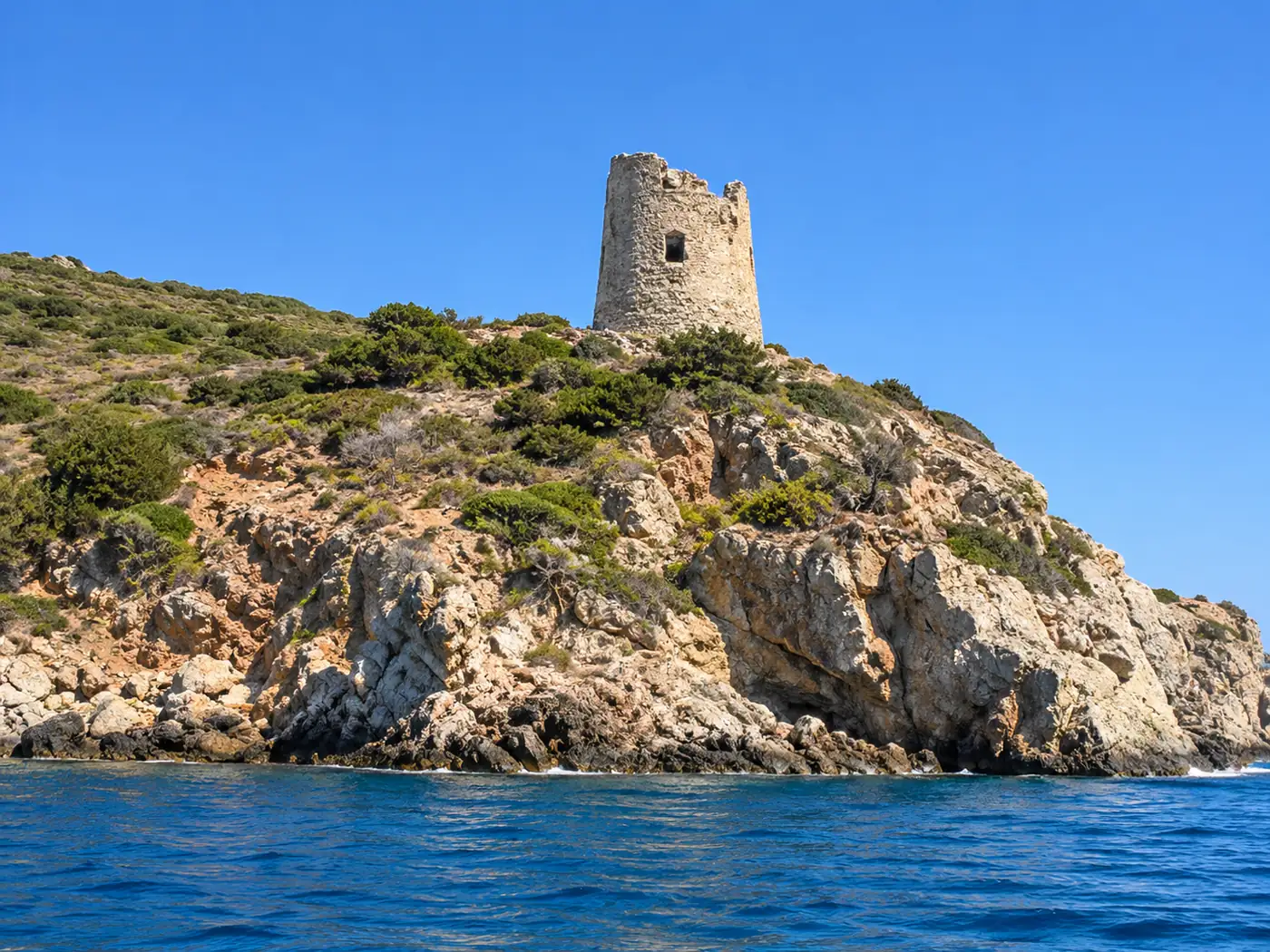
- The towers: the Spanish watchtower above Poetto, part of the defences against Saracen raids, and the Sant'Elia tower, which Cagliari Turismo says the Pisans built in 1282.
- World War II: forts and a blockhouse along the path.
Sardegna Turismo says the watchtower was called pouhet, little well, in Catalan, and that the name Poetto is thought to come from it. From the boat you see the towers on the skyline; the rest needs the walk.
Can you walk up the Devil's Saddle?
Yes. A free, marked path climbs it from Calamosca, of medium difficulty, with trekking shoes and water recommended. The north side towards Marina Piccola is a military zone.
Italia.it and Sardegna Turismo give the start at Calamosca beach or nearby Marina Piccola, and Sardegna Turismo puts the climb from Calamosca to the Poetto tower at around an hour. Cagliari Turismo says the path is marked with green dots and suits anyone used to walking. The Ministry of Culture's atlas lists free entry, medium difficulty and no access for people with reduced mobility.
Two limits to know. Wikipedia notes that the northern slope, facing Marina Piccola and Poetto, is military land closed to the public, so you go in from the Calamosca side; and the far end towards Cala Fighera is closed for safety. Sardegna Turismo suggests the path after sunset with a specialist guide. Calamosca has parking and a bar-kiosk.
Devil's Saddle on foot or by boat: which is better?
Do both if you can. The walk gives you the ruins and the view to Capo Carbonara; the boat gives you the cliffs from below, the caves and a swim in the coves.
How the two compare, from the official pages and the listings:
| On foot | By boat | |
|---|---|---|
| Cost | Free | From $44 per person; kayak $33 |
| Start | Calamosca (or Marina Piccola) | Molo Dogana, Su Siccu or Marina Piccola |
| Time | Around an hour up to the Poetto tower | 2 hours to 3 hours; 8 hours on the full day |
| You see | Temple ruins, cisterns, towers, Poetto and the salt pans from above | White cliffs, sea caves, Calamosca, Cala Fighera, Poetto from the sea |
| Swimming | At Calamosca beach | Swim stops from the boat, snorkel gear included |
| Access | Medium path, not for reduced mobility | Boarding a boat; not for everyone (see each listing) |
| Best time | Cooler hours, or after dark with a guide | Mornings, usually calmer water per the zodiac listing |
Our pick for a first visit: the boat in the morning, a walk at Calamosca another day. From the summit, on a clear day, the view runs along Poetto to Capo Carbonara (Cagliari Turismo). A kayak sits in between: your own pace, at water level, under the cliffs.
What is Cagliari famous for?
The Devil's Saddle and its legend, the long city beach of Poetto, the old hilltop quarter of Castello and the flamingos of the Molentargius salt pans.
- Poetto: about 8 km of sand from the Saddle to Quartu Sant'Elena, one of the largest city beaches in Europe, per Sardegna Turismo.
- Castello: the most historic of the four old districts, perched on a limestone hill above the sea (Italia.it). You see it rising behind the harbor as the boat comes back.
- Molentargius: the salt-pan park behind Poetto. Its own website says the lagoon has in recent years been the most important flamingo nesting site in the Mediterranean.
- The Gulf of Angels: the bay itself, named for the legend above.
A morning on the boat and an afternoon in Castello fit in one day; one day in Cagliari with a boat trip lays it out.
Frequently asked questions
How high is the Devil's Saddle?
About 135 meters at its highest point, per Wikipedia; the Italian Ministry of Culture's atlas lists 130 m.
Can you swim at the Devil's Saddle?
Yes, from a boat anchored in the coves, or at Calamosca beach. The catamaran listing says swimming from the beaches and cliffs along its route is prohibited by law because of the risk of rockfall.
Which boat tours go to the Devil's Saddle?
All the guided trips on this site sail round it, from the 2-hour zodiac to the full day with lunch. The rental and the kayak go there too.
Is the Devil's Saddle walk hard?
Medium, per the Ministry of Culture's atlas. Cagliari Turismo says anyone used to walking can do it with trekking shoes and water. It is not accessible for people with reduced mobility.
Ready to book
Choose your boat
Free cancellation up to 24 hours before on every option. Prices are from-prices in USD and move with the season.
Boat Tour with 4 Swim Stops & Prosecco
- 3-hour boat tour
- 4 swim stops
- Snorkeling mask and tube
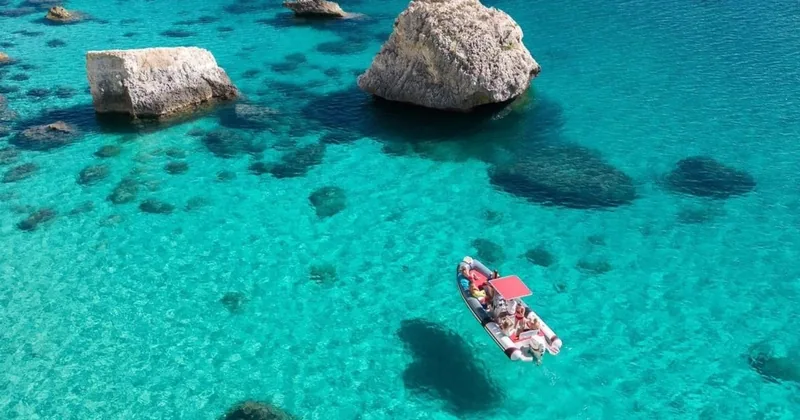
Devil's Saddle Boat Tour with Spritz
- 3-hour boat tour with skipper and guide
- Swim stops
- Spritz and drinks on board
Kayak or Paddleboard to the Devil's Saddle
Paddle under the cliffs yourself, without a guide